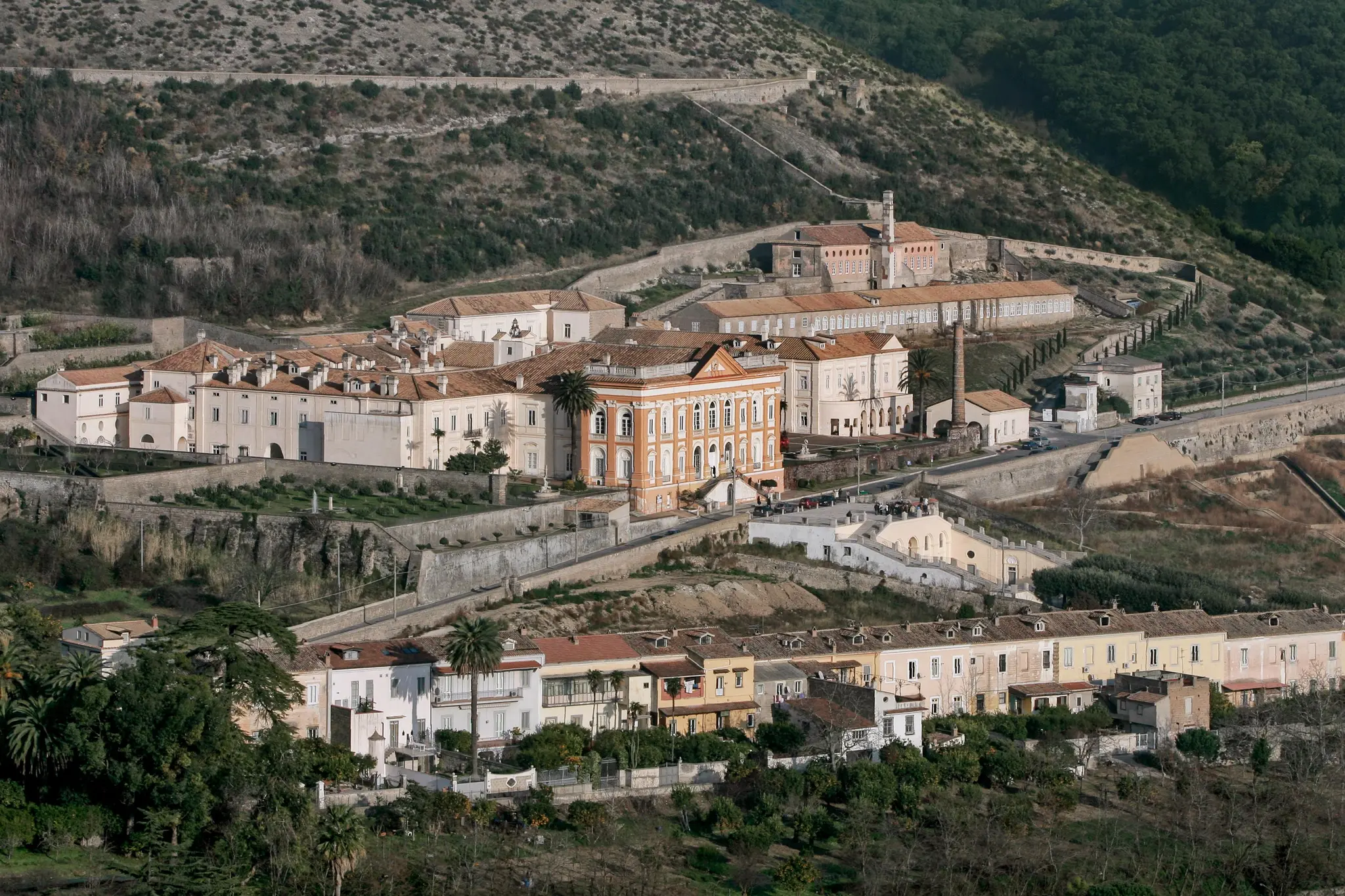
Silk and history, beauty and grandeur. Continuity in today's Italy, which was once the Kingdom of Naples. In the 18th century, the Bourbon dynasty brought splendor, power, wealth and art to the city of Caserta: from the beautiful Royal Palace (Reggia), created to become the royal residence of the new capital, to the Royal Complex of San Leucio, home of gender and social equality, where the most a precious and wellknown silk in the West. The history of San Leucio began in 1750, when King Charles of Bourbon bought Mount San Leucio. It also housed the residence of the princes of Aquaviva, called Lo Bello Zee, because it rises not only over the great plain of Caserta, but also over the Gulf of Naples with the islands of Capri and Ischia on the horizon. The Villa of the Princes of Aquaviva was renovated during the reign of Ferdinand IV of Bourbon and became the new royal residence. The modernization work, coordinated by the architect Francesco Collecini, was completed in 1786. Not only were apartments for the sovereigns built, but also, what was the first big news, premises for the production of textiles. The royal residence thus coexisted with a spinning mill, administrative offices, the premises of a regular school, the armory, a parish church, and a priest. These were the first steps towards the creation of the Royal Complex of San Leucio.
Nadia Verdil,
writer and journalist, has written twenty books and many of her essays have been published in national and international magazines. Speaking at conferences and training seminars, as a historian, for many years she devoted her research to rewriting the History of Women.
Silk has been produced in this unusual place since 1773. Very clean. Great. Precious, like so much more.
We continued the construction of the workers' quarters of San Carlo and San Ferdinando, dedicated to the saints whose names were named after Kings Ferdinando and Maria Carolina. Houses were built in them, donated by the state to weavers and weavers, as well as to young families. These were comfortable houses with very high ceilings (since they were supposed to contain machines), with fireplaces in each apartment, also suitable for making silk cocoons. All stages of the silk production process took place in the Royal Complex of San Leucio - from silkworm breeding to spinning and fabric production. For several years this corner of the Kingdom became an outpost of social justice, personifying enlightened despotism. The Royal Complex of San Leucio was a manufacturing settlement built with the aim of improving the economic conditions of the state through a production program capable of exporting the product outside the Kingdom and allowing a fair and innovative distribution of income and wealth to be maintained at all social levels. The present Complex of San Leucio was governed by a law introduced by Queen Maria Carolina that abolished millennial customs and injustices that women suffered; here they ceased to be subordinate at the legal, administrative, family level and had the same rights and obligations as men.
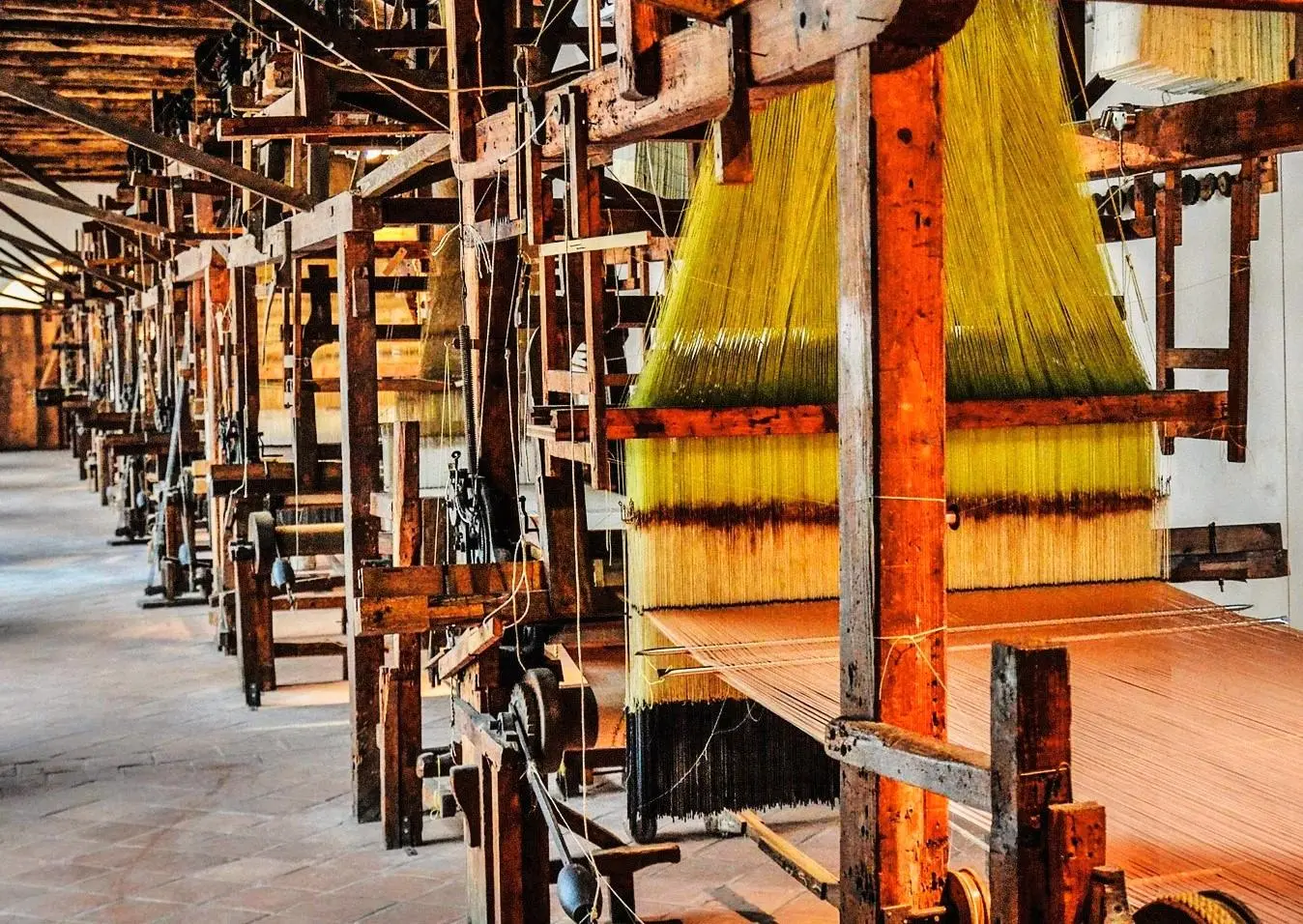
This law introduced social systems unthinkable at that time: help from birth to death, marriage allowance, dowry for a newborn, free and compulsory school, paid apprenticeships for both women and men, their full equality in work, widow's pension, cash mutual assistance, free funerals, free and constant use of the house. He also guaranteed rent to those who, without a home of their own, had to look for it, waiting for the state to provide it. There was no differentiating factor for the settlers, except for merit, which served as an additional incentive for production. He established compulsory smallpox vaccination. It was 1789.
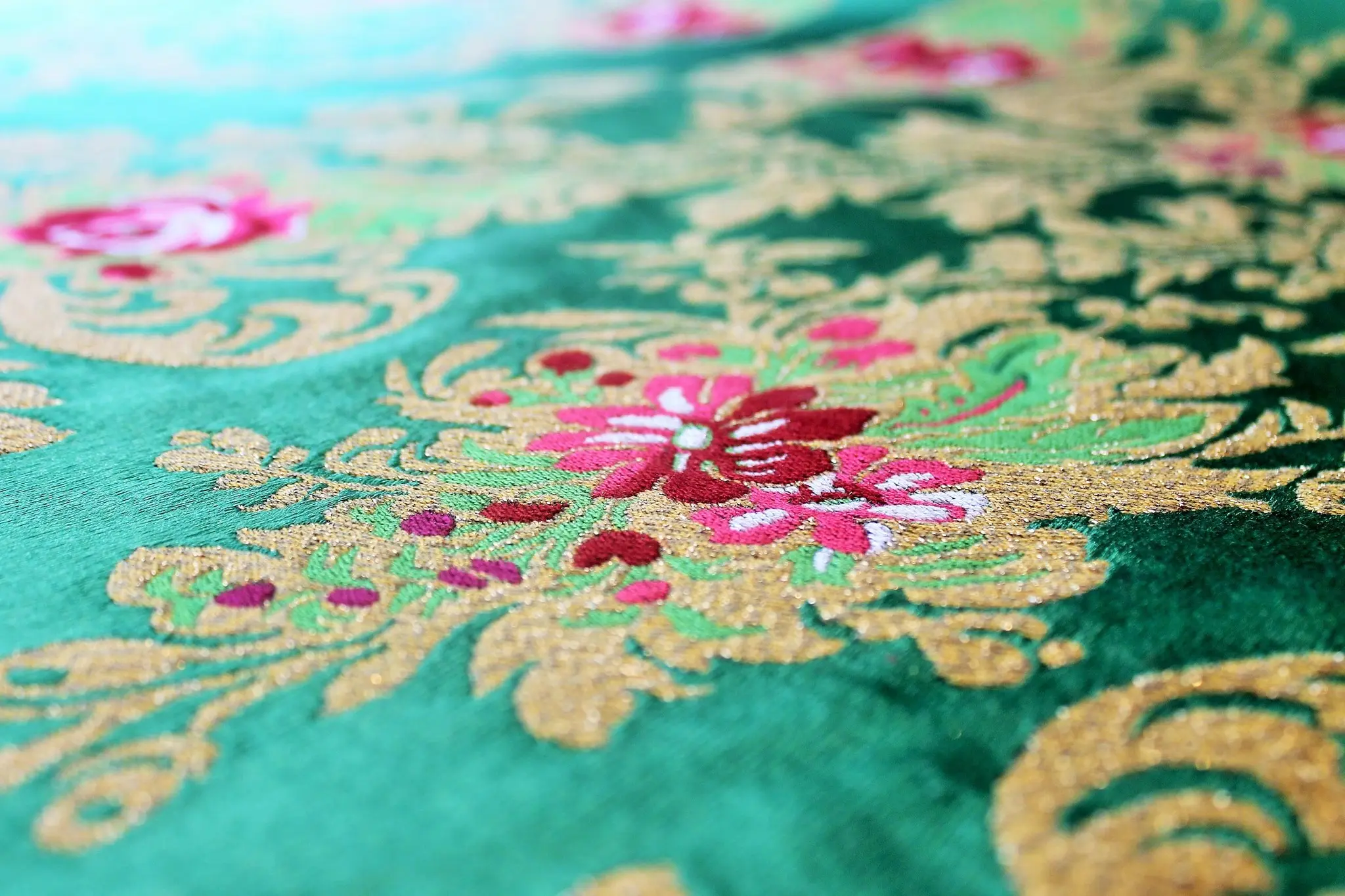
Silk has been produced in this unusual place since 1773. Very clean. Great. Precious, like so much more. Damascus, brocade, spolinati, paintings, silk of San Leucio are world-class craftsmanship. They adorn the White House, the Kremlin, the Quirinal Palace, the Vatican, Buckingham Palace and the most famous high-end royal residences and continue to be sought after by the most prestigious designers. Because of its brightness, silk has always been used as a symbol of luxury, but in San Leucio it was a symbol of equality and social justice. Silk companies, which still produce precious fabrics and bring the beauty of tradition to the world, were born into the families of those who once worked in this Royal Complex.
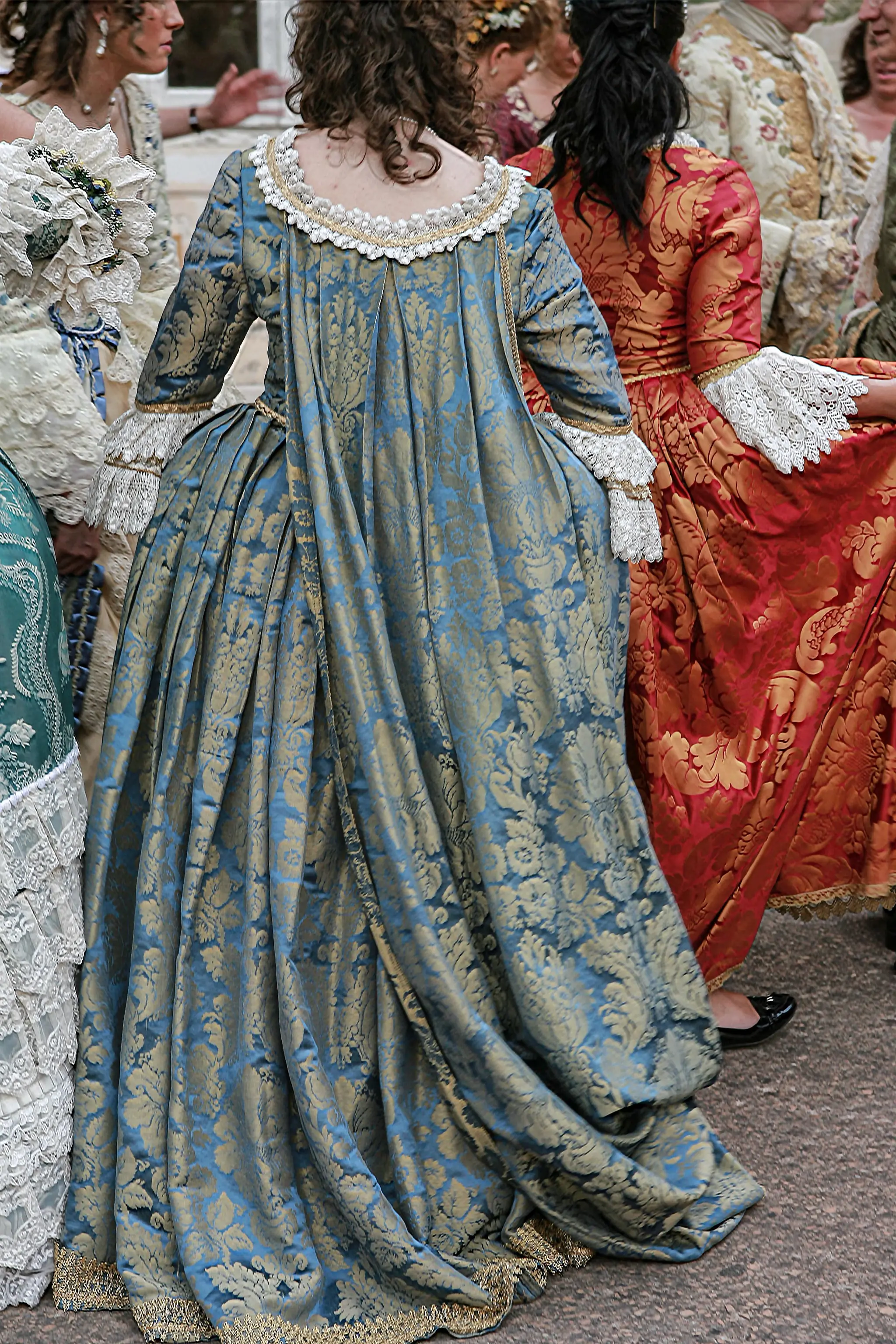
In the monumental complex of San Leucio, where today the Silk Museum is located, the University of Campania «Luigi Vanvitelli» has organized advanced training courses in the direction of Design and Fashion. The prestigious state art school "San Leucio", following the tradition of silk production, has been operating for sixty years. «We were born in high school in the Belvedere of San Leucio,» explains the director of Immacolata Nespoli, «and the first course was weaving. Then the history of our high school evolved; today we have many courses for the different needs of young people, but silk remains our main vocation. During the Design and Fashion course, we continue to create precious eighteenth-century garments from the fine silk of San Leucio. We are invited to festivals, permanent and traveling exhibitions, to film sets to showcase our historical costumes. History for us is not only a teacher, but also a life partner ».
The monumental complex of San Leucio, the Royal Palace of Caserta and the aqueduct, built by the great architect Lugi Vanvitelli in 1762, were declared a UNESCO World Heritage Site in 1997. Silk, art, beauty and culture make the history of this place eternal.